
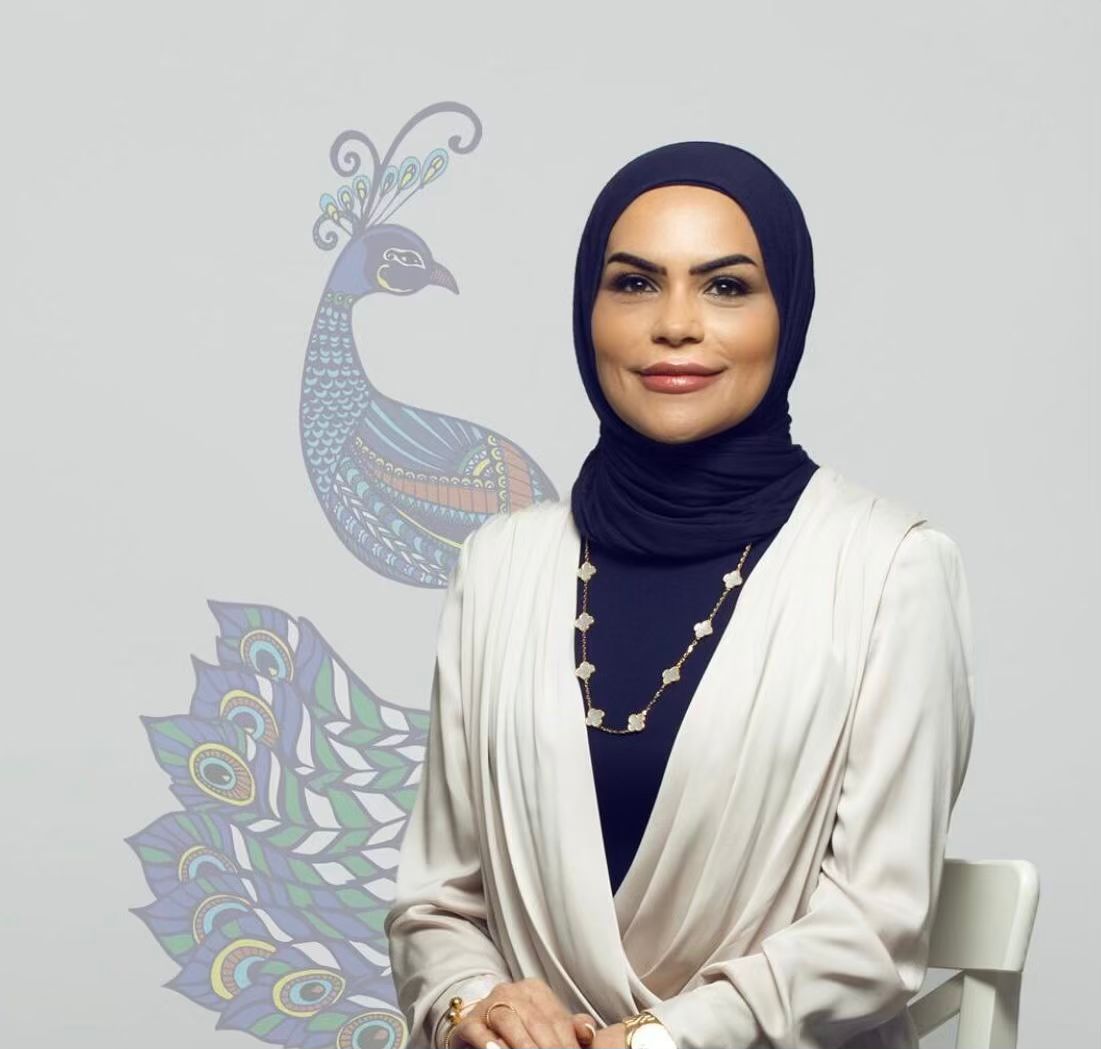

In a world increasingly defined by rapid exchanges and digital interactions, Latifa Al-Loghani has carved a niche that bridges tradition and contemporary wisdom. A celebrated writer and etiquette coach, Al-Loghani is a name synonymous with refinement, grace, and the deeper understanding of human interaction. But beyond the polished veneer of social etiquette, she has pioneered a concept that is transforming personal and professional lives across the Arab world: Spiritual Etiquette.
The Journey to Mastery
Latifa Al-Loghani’s story is one of dedication and passion for languages and cultural diplomacy. Holding a degree in English Literature with a minor in French, she is fluent in Arabic, English, French, and Spanish. This multilingual prowess has not only enabled her to engage with global cultures but has also deepened her appreciation for the nuances of communication and etiquette.

Her talent for expression was recognized early on when she won first place in a national competition in Kuwait in 2000 for writing a letter to former French President Jacques Chirac. Two years later, she claimed the top prize in the Sheikh Mohammed bin Rashid Al Maktoum Award for Arts and French Literature, solidifying her reputation as a gifted writer and thinker. Her accolades continued with the Excellence Award from the Kuwaiti Prime Minister in the Arab Media Forum in 2015. In 2016, she was crowned the ‘Queen of Gulf and International Etiquette’ and named one of the most influential personalities in the Arab world.

Her literary contributions are no less impressive. With eight bestselling publications, Al-Loghani’s works have dominated the charts in the Arab world. Her latest book, The Mental Block 2, continues to inspire readers to refine their thoughts and interactions.
The Birth of Spiritual Etiquette
Traditional etiquette teaches social decorum, but Al-Loghani realized that external refinement means little without internal harmony. Spiritual Etiquette is her brainchild—a philosophy that emphasizes emotional intelligence, self-respect, and positive energy.
“Spiritual Etiquette means dealing with your soul with high positivity,” she explains. “It means less anxiety, more awareness, and a deeper understanding of oneself. When you learn to respect and love yourself, you naturally exude elegance and treat others with the same grace.”
Her workshops have become a haven for individuals seeking to realign their emotional and mental states. One of her most sought-after sessions is on eliminating toxic relationships—a topic that resonates deeply in today’s emotionally complex world.
Breaking Free from Toxic Relationships
Al-Loghani’s advice on toxic relationships is simple but profound: Take control of your behavior, not others’. “Do not allow anyone to manipulate your emotions or invade your mental space,” she insists.
She highlights common manipulation tactics, such as statements like:
- “If you trusted me, you’d listen to me.”
- “If you loved me, you’d quit your job.”
- “If you don’t do this, I’ll leave you.”
- “You don’t deserve anything good.”
According to Al-Loghani, recognizing these patterns is the first step to breaking free. The second step is setting firm boundaries. “You are not responsible for anyone’s emotional baggage,” she affirms. “Your kindness should not be a weakness. Protect your mental peace with the same elegance you exhibit in social interactions.”
The Necessity of Spiritual Etiquette
How does Spiritual Etiquette differ from traditional etiquette? “Just as you present yourself with sophistication to the outside world, you must treat your inner self with the same dignity,” she explains.
Today’s fast-paced world makes inner peace a rare commodity. Stress, social pressures, and negative influences can erode one’s mental well-being. “You cannot leave a lasting positive impression on others if your soul is in turmoil. When you nurture your spirit, your presence becomes magnetic,” says Al-Loghani.

Transformative Stories
The impact of Al-Loghani’s teachings is evident in the transformations of her students. One mother, after attending her workshop, wrote:
“I could never control my words when speaking to my children. After practicing your techniques, I committed to eliminating negative language from my vocabulary. Now, I replace criticism with encouragement, and the change in our relationship is incredible.”
Such stories highlight the power of words and the ripple effect of treating others with consideration and respect.
Common Etiquette Mistakes People Unknowingly Make
Al-Loghani has observed recurring etiquette mistakes, particularly in personal and professional settings:
- Negativity and self-doubt: A lack of confidence manifests in communication.
- Engaging in fruitless arguments: Many fail to listen actively and resort to unnecessary confrontations.
- Pretending to be someone else: This damages authentic connections.
- Failure to apologize: Owning one’s mistakes is a sign of true refinement.
- Arrogance and insensitivity: Overlooking personal boundaries leads to discord.
- Lack of privacy awareness: Gossiping or discussing salaries in professional settings is inappropriate.
- Speaking loudly in public: A moderate tone reflects composure and professionalism.
- Poor time management: Respecting appointments is fundamental to professional etiquette.

Setting Boundaries with Grace
How does one maintain elegance in challenging relationships? Al-Loghani stresses the importance of setting clear, healthy boundaries. “Boundaries protect your peace and ensure mutual respect. When you define how you expect to be treated, you prevent unnecessary conflicts.”
She outlines signs that indicate a need for boundaries:
- Feeling emotionally drained after interactions.
- Being constantly guilt-tripped.
- Having your opinions dismissed or ridiculed.
- Being yelled at or manipulated.
- Feeling pressured to share personal details.
If these occur, Al-Loghani advises addressing them directly and calmly. “Express your needs with confidence. If someone insists on overstepping, walk away with grace. Elegance is in knowing when to stay and when to leave.”
The Core Lesson of Spiritual Etiquette
What is the ultimate takeaway from Al-Loghani’s work? Mental blocking—a term she coined, which has now gained widespread recognition. “Mental blocking is a form of emotional self-discipline,” she says. “It is a way to preserve your energy and avoid being consumed by unnecessary drama.”
Spiritual Etiquette, according to Al-Loghani, is a guide to a fulfilling life. It teaches how to navigate relationships, handle stress, and maintain one’s dignity even under pressure. “To live elegantly,” she states, “is to be in control of your mind, emotions, and responses.”
A Final Word of Advice
Al-Loghani leaves her readers with a thought-provoking message: “Your face may be the most beautiful in the world, but if your energy is negative and your presence exhausting, you are far from being truly refined.”
Her final advice? “Offer your warm smile generously. Be emotionally intelligent. Be kind without being naive. And most importantly, protect the elegance of your soul.”
With her unique blend of wisdom and sophistication, Latifa Al-Loghani is not just teaching etiquette—she is redefining it.





Leave a Reply