
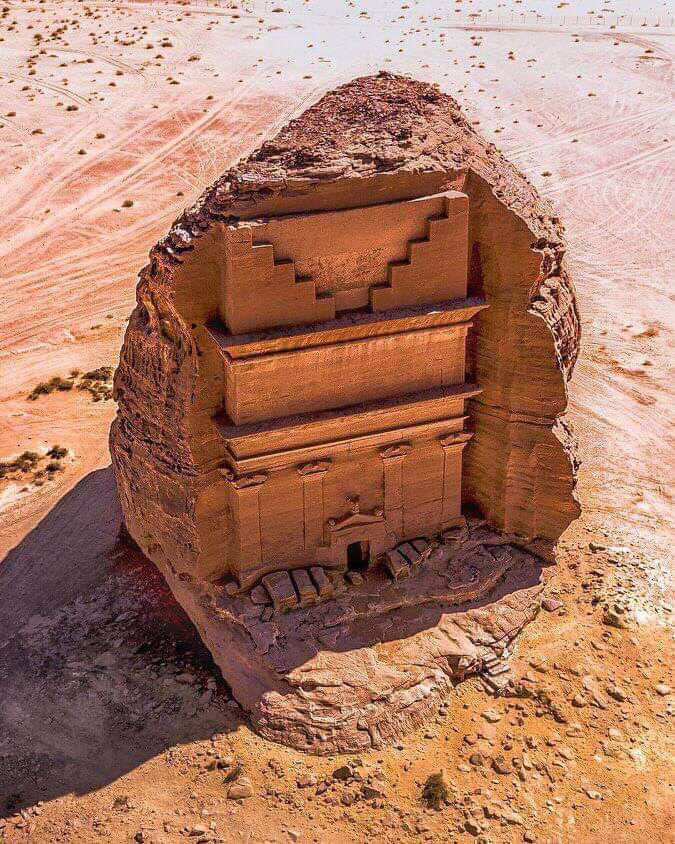

Nestled in the heart of Saudi Arabia’s northwest region lies Mada’in Saleh, also known as Al-Hijr, an archaeological marvel that stands as one of the most extraordinary landmarks in the world. Located near Al-Ula, this site has garnered international acclaim as the first Saudi location to be inscribed on UNESCO’s World Heritage List, making it a pivotal cultural and historical treasure for the Kingdom.
A Window Into Ancient Civilizations
Mada’in Saleh’s significance is rooted in its history as a key hub of the ancient Nabataean civilization, which flourished during the first century BCE. This civilization is also famed for its architectural feats in Petra, Jordan. At Mada’in Saleh, visitors are greeted by intricately carved tombs and monumental structures, hewn directly from sandstone cliffs. These constructions not only reflect the Nabataeans’ architectural ingenuity but also their cultural and commercial prowess, as the site once served as a vital stop on the incense trade route connecting Arabia to the Mediterranean.
Why Is It Considered One of the Strangest Landmarks?
What sets Mada’in Saleh apart is its surreal and enigmatic atmosphere. The site’s colossal rock formations, meticulously carved facades, and vast desert landscape evoke a sense of timelessness. Visitors often describe it as otherworldly—a place where history feels palpably alive yet cloaked in mystery. Its isolation amid the vast Arabian desert only adds to its intrigue, creating a stark contrast between ancient human craftsmanship and the raw, untamed nature surrounding it.
A Rising Star in Saudi Tourism
In recent years, Mada’in Saleh has become a cornerstone of Saudi Arabia’s tourism initiatives, particularly under the Kingdom’s Vision 2030 strategy, which aims to diversify the economy and spotlight its rich cultural heritage. Al-Ula, the region where Mada’in Saleh is located, has been transformed into a vibrant cultural hub, hosting international festivals, concerts, and exhibitions. This emphasis on heritage tourism has not only attracted global attention but also boosted the local economy, drawing visitors from across the globe eager to explore this UNESCO-recognized gem.

A UNESCO World Heritage Legacy
Being the first Saudi site added to UNESCO’s World Heritage List in 2008, Mada’in Saleh holds a special place in the Kingdom’s cultural narrative. It paved the way for other Saudi landmarks to gain international recognition, cementing the country’s reputation as a destination rich in history and heritage. For Saudi Arabia, Mada’in Saleh is not just an archaeological site but a symbol of its ancient roots and a bridge to a globally connected future.
The Global Perspective
In a world increasingly drawn to unique and untouched historical landmarks, Mada’in Saleh stands out as a testament to human creativity and resilience. Its recognition by UNESCO and its growing popularity among international travelers reflect the shifting focus on Saudi Arabia’s historical and cultural identity as the Kingdom opens its doors to the world.
For economists and policymakers, sites like Mada’in Saleh highlight the potential of heritage tourism to fuel economic diversification, job creation, and international engagement. As Saudi Arabia continues to balance its modern ambitions with preserving its cultural past, Mada’in Saleh remains a beacon of its enduring legacy.





Leave a Reply