
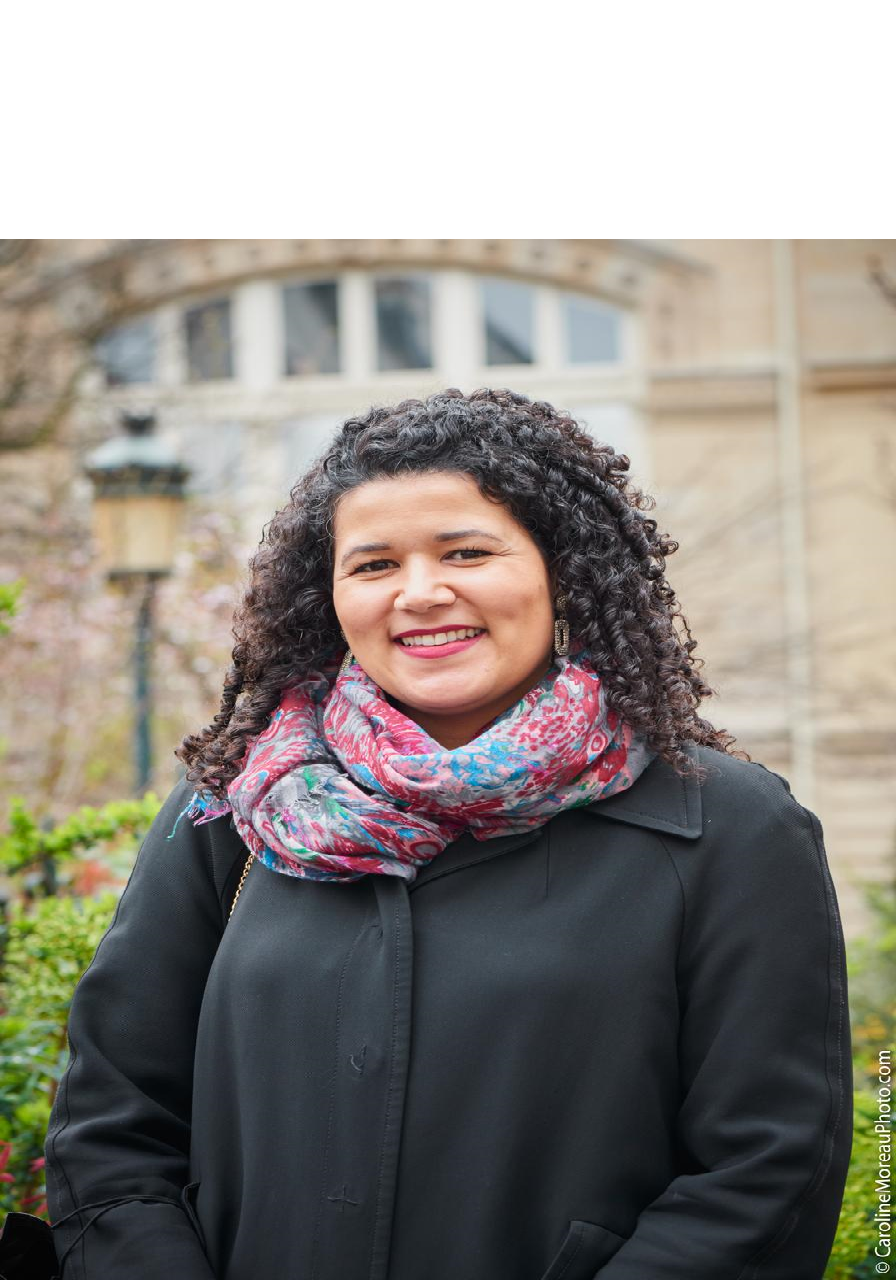

Nawal Abboub has spent much of her life asking the kinds of questions that don’t show up on standardized tests.
Why do some people struggle to express their potential, even when they’re intelligent? Why do our schools teach formulas and facts, but not how to focus, collaborate, or lead? And what if we’ve misunderstood the brain’s ability to learn, grow, and adapt, not just in children, but in all of us?
She’s not asking out of curiosity. She’s building answers.
Trained as a cognitive neuroscientist, Abboub is part of a growing wave of scientists bringing rigorous academic insight into the real world of education, training, and work. As the co-founder and Chief Science Officer of Rising Up, she’s helping to rewrite how we define and develop one of the most misunderstood areas in learning: soft skills.
But her story doesn’t begin in a lab. It begins in quiet observation.
A Mind Shaped by Wonder
As a child, Abboub spent hours watching babies, cousins, neighbors, anyone she could observe. She wasn’t just charmed. She was fascinated. “They learned so fast. They understood tone, emotion, even humor. I kept thinking, how?”
That early obsession never faded. It led her to neuroscience, just as a technological revolution was unfolding. Brain imaging tools like MRI were starting to show the real-time workings of the human mind. “It felt like we were seeing thought for the first time,” she says.
Her academic work—deep, data-driven, precise—soon revealed something else: a disconnect between what we know about how the brain learns, and how people are actually taught.
In university lecture halls, she saw students who could recite formulas but struggled to ask questions. Brilliant minds who couldn’t organize their time or communicate ideas. “They were missing something,” she says. “And no one was helping them see it.”

The Science of What’s Not Taught
This gap between knowledge and self-awareness, between content and capability sparked Rising Up. The platform, built on neuroscience and behavioral research, offers digital tools that help people measure and develop 25 essential soft skills, from emotional intelligence to operational leadership.
At the heart of the system is the Core Skills Scan, an assessment framework recognized by the European Commission as a disruptive innovation. “For a long time, we thought soft skills were unmeasurable,” she explains. “We’ve proven that’s not true.”
Unlike personality tests that label people, Rising Up’s tools are designed to evolve. They help learners identify not just where they are—but where they can grow. And in a world shaped by AI, automation, and constant reinvention, Abboub believes that soft skills aren’t just nice to have. They’re essential.
“These are the skills that shape how we learn, adapt, and connect,” she says. “They influence everythingو from how we lead to how we listen.”
From the Lab to the Classroom and Beyond
Bridging the gap between research and reality hasn’t been easy. The pace of science is slow. The pace of change is not. And educational institutions aren’t always open to outside innovation. But Abboub has remained undeterred, adapting her process, partnering with universities and companies, and measuring results with the same rigor she brought to her research.
That impact is now visible. Students use Rising Up’s tools to build confidence before job interviews. Professionals use them to navigate leadership roles. Educators use them to rethink how they assess talent.
And in the background, Abboub continues to write, teach, and push the conversation forwardو most notably through her acclaimed book La puissance des bébés, which reframes the underestimated intelligence of infants.
Her research shows that babies begin learning language rhythms in the womb, that their brains are biologically optimized for fast, complex learning in ways adults can barely comprehend. “We need to stop underestimating children,” she says. “They’re learning more, and earlier, than we think.”
A Mission Rooted in Equity
For Abboub, the mission goes beyond innovation. It’s about justice. “If you don’t understand how you learn, or how your brain works, you’re at a disadvantage,” she says. “And that disadvantage compounds over time.”
That’s why she works across disciplines education, tech, psychology, businessو with a single goal: to help people unlock their own potential. Not with shortcuts. With science.
And while her résumé spans research centers, academic institutions, and tech labs, her values remain personal. She credits a strong female role model in her family for showing her that unconventional paths are worth walking. She admits she wasn’t the best student. “But I never lost my passion,” she says. “And that made all the difference.”
Her advice to women hoping to lead in science or education? “You’ll never feel 100% ready. Do it anyway. Surround yourself with people who challenge you. Don’t fear complexity—lean into it. And remember that change doesn’t happen from one breakthrough. It happens from showing up again and again, with intention.”



Leave a Reply