
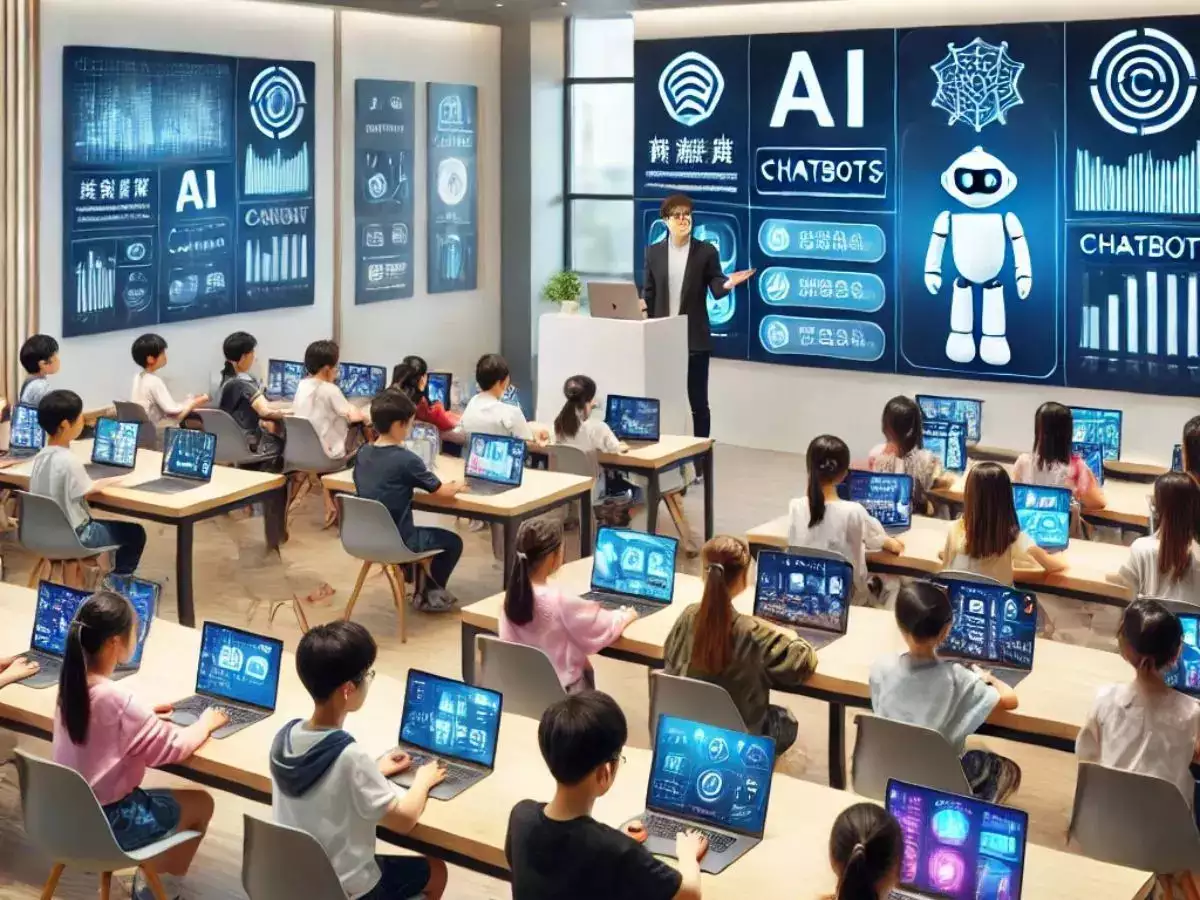

In a groundbreaking initiative, Beijing is set to introduce mandatory artificial intelligence (AI) education for primary and secondary school students starting this fall. This move underscores China’s strategic commitment to cultivating a tech-savvy generation poised to lead in the global AI arena.
AI Education from the Ground Up
The Beijing Municipal Education Commission has mandated that schools provide at least eight hours of AI instruction per academic year. These courses can be standalone or integrated into existing subjects like information technology and science. The curriculum is tailored to different educational stages:
• Primary Schools: Emphasis on experiential learning to introduce basic AI concepts.
• Junior High Schools: Focus on applying AI in academic and daily contexts.
• Senior High Schools: Practical courses aimed at enhancing AI application and fostering innovation.
This structured approach ensures a progressive build-up of AI knowledge, equipping students with the skills necessary for future technological landscapes.
Catalysts Behind the Initiative
China’s rapid advancements in AI have been spotlighted by companies like DeepSeek, which unveiled a low-cost reasoning model earlier this year, rivaling top competitors such as OpenAI’s ChatGPT. Such breakthroughs have propelled China to the forefront of the AI industry, prompting educational reforms to sustain and accelerate this momentum.
A Global Perspective
China’s proactive stance on AI education contrasts with initiatives in other regions. For instance, California has mandated AI literacy in school curricula, and Italy is experimenting with AI tools to enhance digital skills. However, China’s nationwide, structured implementation from primary education sets a precedent in embedding AI literacy from an early age.
Implications for the Future
By integrating AI education into the core curriculum, China is not merely responding to current technological trends but is strategically positioning its future workforce to be pioneers in AI innovation. This initiative reflects a broader vision to embed technological proficiency deeply within the societal fabric, ensuring sustained leadership in the global tech ecosystem.
Conclusion
China’s decision to introduce AI education to students as young as six is a bold and forward-thinking strategy. It highlights the nation’s commitment to fostering innovation and maintaining a competitive edge in the rapidly evolving world of artificial intelligence. As this generation grows, they are poised to drive China’s ambitions of becoming a global leader in AI technology.
For a visual overview of China’s AI education initiative, watch the following video:




Leave a Reply